
Our Historical Sources
Historical European Martial Arts is built upon a foundation of scholarly treatises written across hundreds of years of history in the European continent. These manuscripts were authored by masters who often dedicated their whole lives to fighting, whether to teach others, to serve their liege lord, or for their own sense of honor. Today, nearly all those who practice HEMA rely on these historical works to provide authenticity and guidance to the techniques and the weapons they attempt to use.
Savannah Longsword focuses on the works of an Italian master named Fiore dei Liberi, who spent his life as a traveling knight, fencing instructor, and master at arms to the Italian nobility. Fiore recorded his knowledge in a treatise he titled Il Fior di Battaglia, or The Flower of Battle. It is where much of modern HEMA derives its techniques from, and it is the chief text that our club relies on to instruct our members on the art of historical fencing.
Fiore dei Liberi
The Flower of Battle
“It’s my opinion that in this art there are few men in the world who can really call themselves Masters, and it is my goal to be remembered as one of them.”
– Fiore dei Liberi, Il Fior di Battaglia
Fiore dei Liberi was born in modern day Northern Italy, living from roughly 1350 to sometime after 1409, fighting and traveling extensively throughout his life. In the early 1400’s, he authored The Flower of Battle, the earliest known Italian master from whom a work survives. The Flower of Battle is one of the most important HEMA texts today; it gained prominence early in the HEMA movement and has come to be cemented as one of the foundational historical fencing manuscripts.
Fiore’s treatise covers a wide array of combat and weaponry, from swords to daggers, spears, batons, and poleaxes, to fighting on horseback, in armor, and grappling hand-to-hand. We focus primarily on the Sword in Two Hands section in his work, using his terms, techniques, and principles wherever possible to apply his art correctly and authentically.
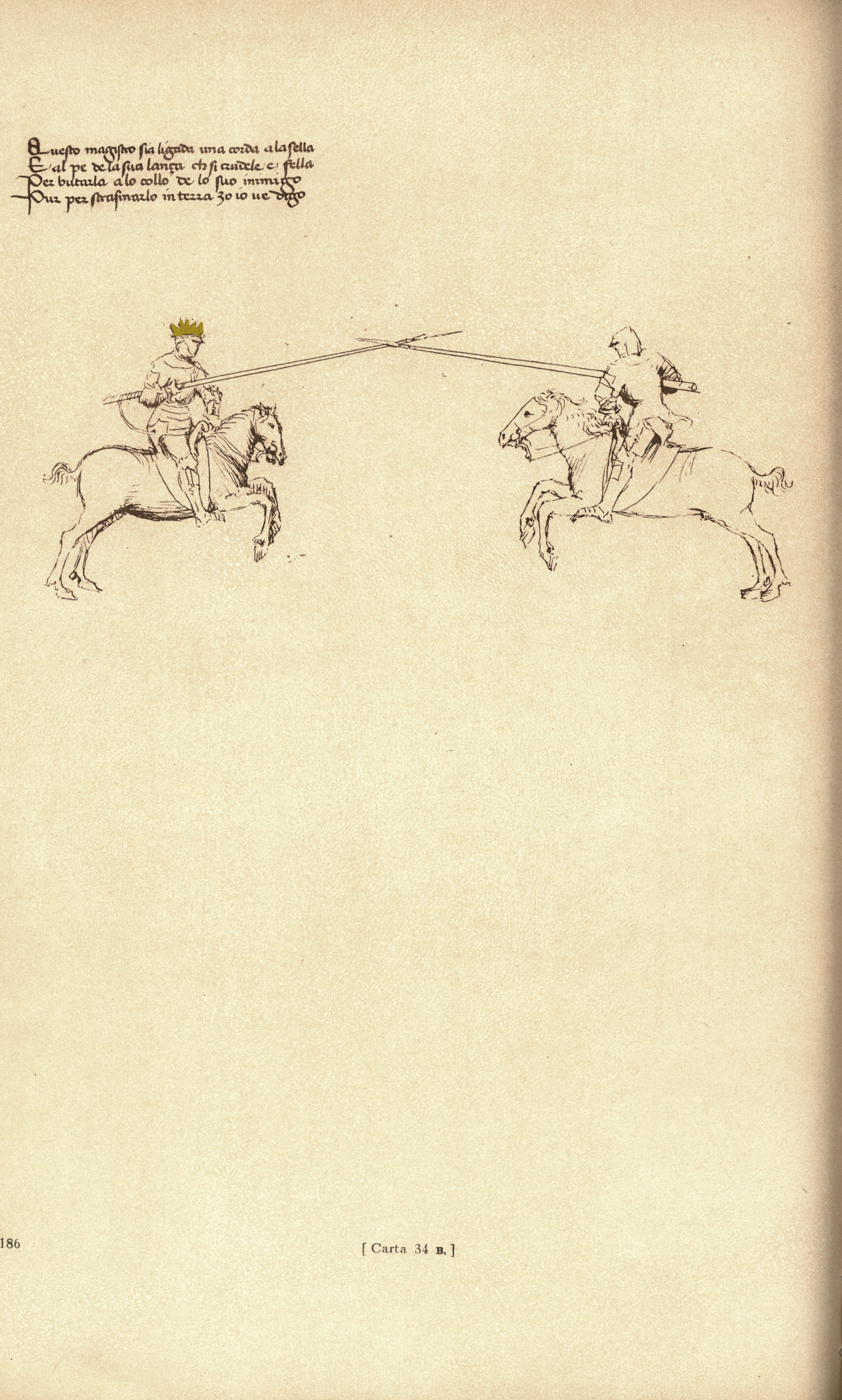
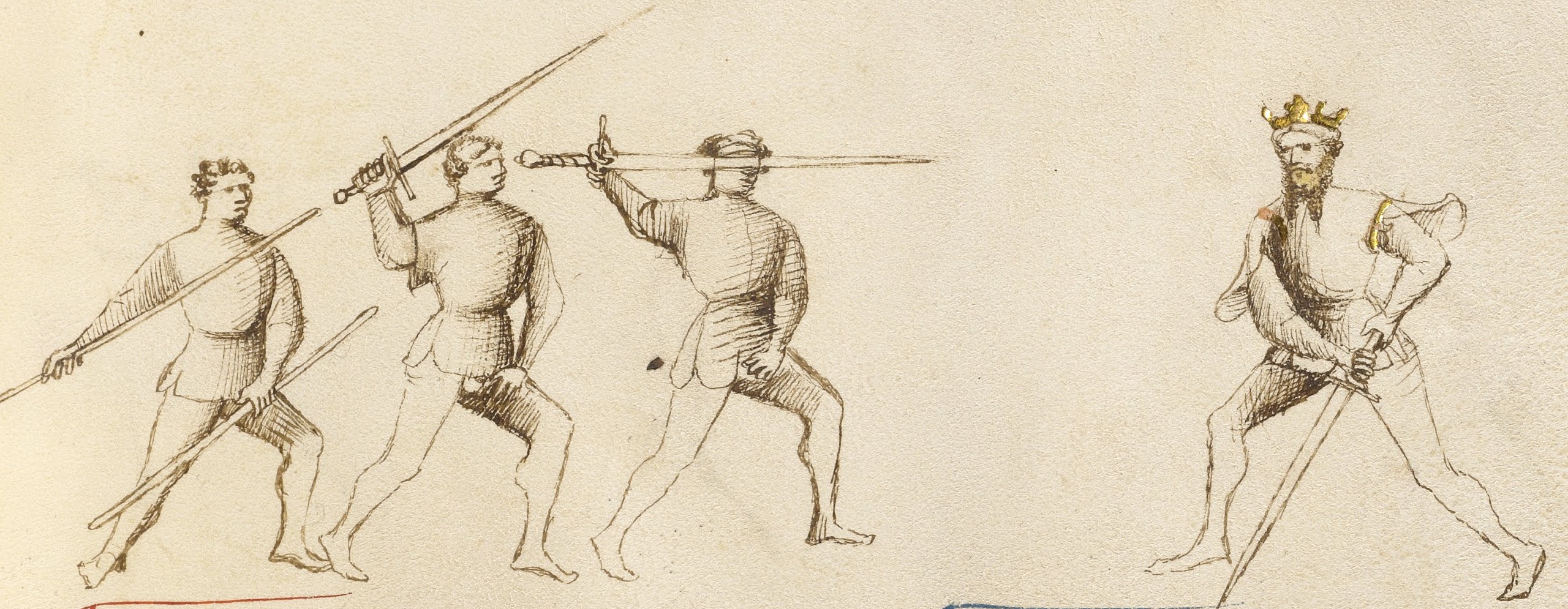
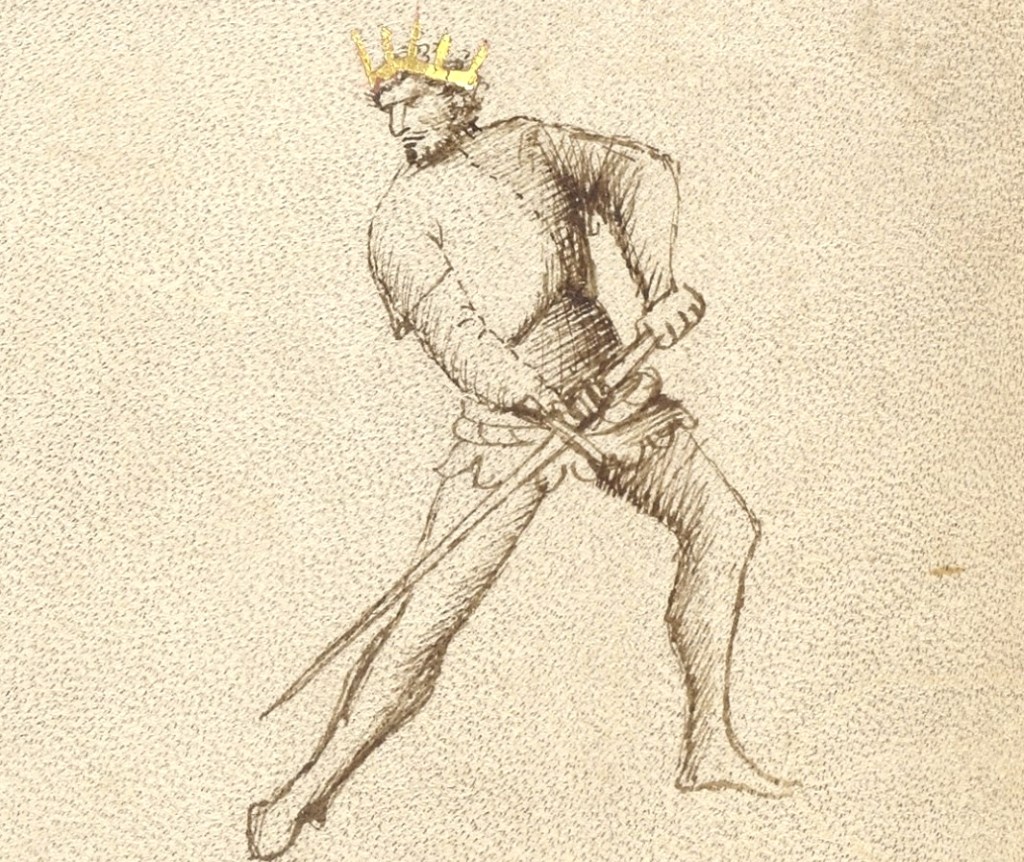
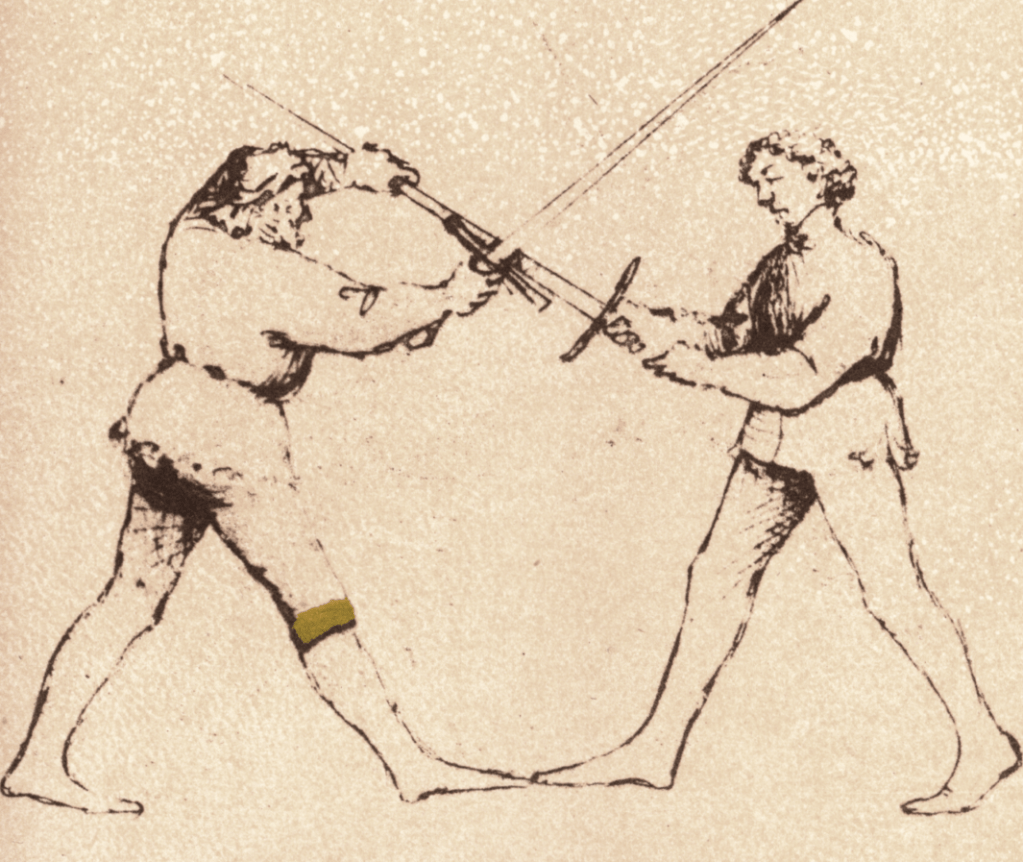
Below are illustrations taken from Fiore’s treatises.

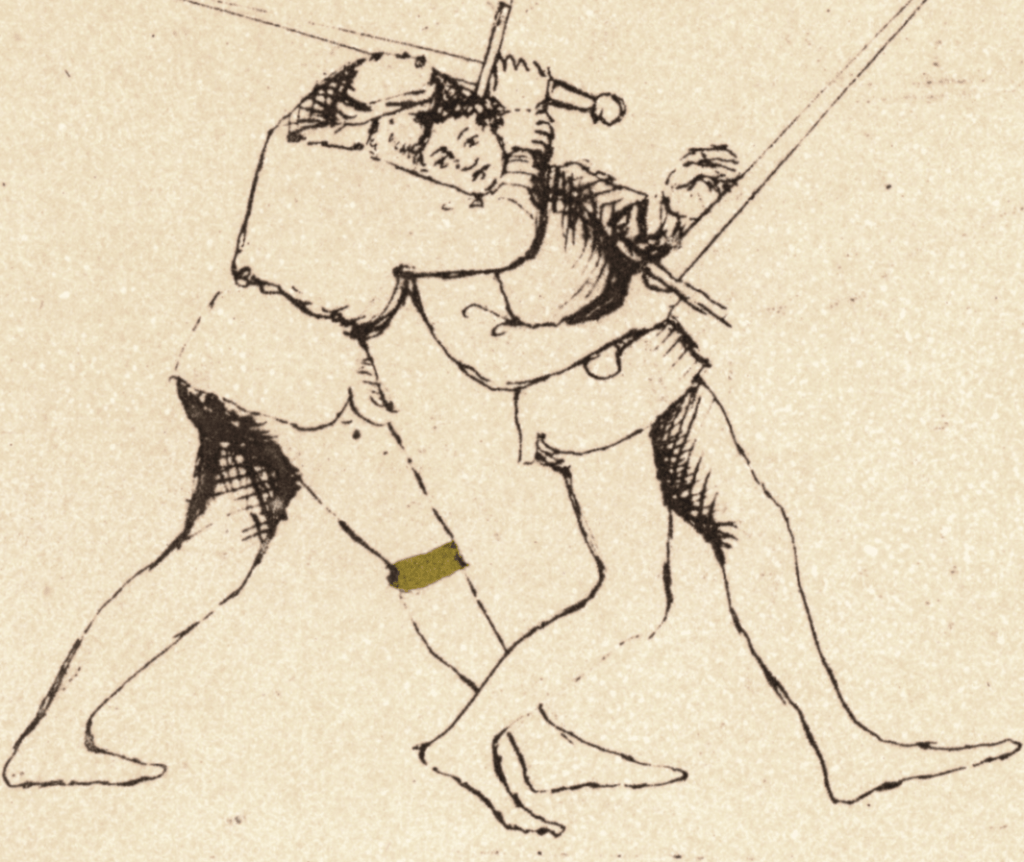
More specific details about Fiore’s treatises, including the copies we have today, can be found below.
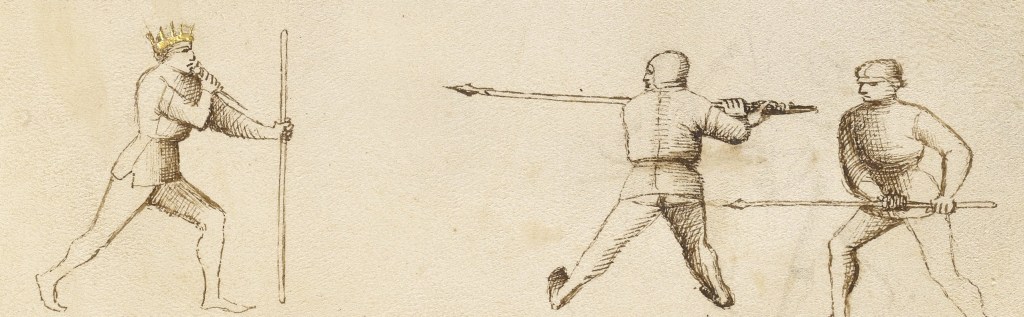
The Flower of Battle
The Surviving Manuscripts
As mass printing was not yet available in the early 15th century, all of the known surviving copies of The Flower of Battle were written down and illustrated by hand, each containing essentially the same information but differing in some way from the others. There exist four of them, passed down through the centuries and today housed in museums and private collections around the world.
The known manuscripts of The Flower of Battle are held in the following locations:
- The Morgan Library & Museum in New York City,
- The J. Paul Getty Museum in Los Angeles,
- The Bibliothèque nationale de France in Paris,
- And the Museo archeologico Villa Pisani Dossi in Corbetta, Italy.
They are known colloquially by the place where they are held, referred to as the Morgan, the Getty, the Paris, and the Pisani Dossi respectively. Below are excerpt illustrations taken from each of the surviving copies of The Flower of Battle.
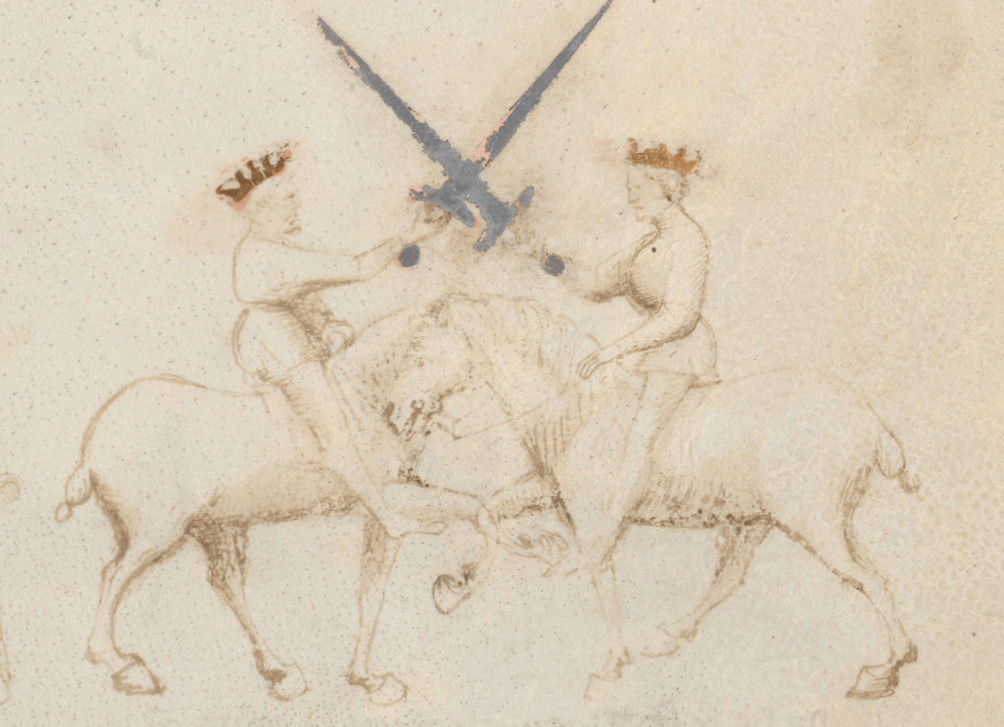


For those interested, scans of the original sources are readily accessible to view online today, and a wide range of translations, commentaries, and interpretations of Fiore’s work have been written by HEMA practitioners and scholars.
Many other sources of Historical European Martial Arts are available to study. The Flower of Battle is but one text amongst a rich tradition of fencing manuscripts written by dozens of masters across centuries of European history. HEMA clubs around the world study other Italian masters alongside Fiore, and many dedicate themselves to the treatises of the German masters, and so on. More information, as well as the numerous sources themselves, can be found on Wiktenauer, the HEMA wiki. Physical HEMA books and manuscripts can be found at various sources online, such as Amazon and HEMA Bookshelf.
 Savannah Longsword Fencing Club